

In Australia, there is a high demand for workers in the building and construction industry, which means this industry offers numerous job opportunities. In this competitive world of construction, doing a short course is a great way to boost a career for newcomers and workers who want to advance their careers in the building and construction industry.
At DLI Training, we deliver nationally recognised building and construction courses to provide you with the necessary skills and knowledge required to work on building and construction sites. These courses not only validate your skills and knowledge but also allow you to perform work efficiently and safely. Considering the high demand for these courses to work in the construction industry, we have curated a blog post covering every piece of information that you need to know to enrol in any of the following courses to kick-start your career. Without any further ado, let’s understand every course in detail.
White Card Course
In Australia, a White Card is the General Construction Induction Card that is legally required to perform any work on a construction site. Workers must complete the White Card before being allowed to work on any construction or building site.
White card training course plays a crucial role in the construction industry and its related services. It is essential for all construction workers to undergo this training to ensure their safety and the safety of others on site. Our white card training in Auburn provides workers with a comprehensive understanding of occupational health and safety practices, risk management, and emergency procedures. By completing this training, construction workers are equipped with the necessary knowledge and skills to minimise accidents, promote workplace safety, and comply with legal requirements.

What will I learn in the White Card Course?
The White card training course is CPCWHS1001 Prepare to Work Safely in the Construction Industry and is designed to provide sufficient knowledge and skills to workers to perform safe work in construction. By completing this course, participants will gain the skills and knowledge to:
- Identify the health and safety legislative requirements of construction work
- Identify construction hazards and risk control measures
- Identify incident and emergency response procedures
- Identify health and safety communication and reporting processes
How to Get a White Card in Australia
To obtain your white card in Australia, you must successfully complete CPCWHS1001 Prepare to Work Safely in the Construction Industry with a Registered Training Organisation that is also a SafeWork NSW-approved provider, such as DLI Training.
Just follow these steps:
- Enrol in CPCWHS1001 Prepare to Work Safely in the Construction Industry with DLI Training
- Make sure you meet the eligibility requirements
- Minimum 14 years of age
- Have a USI
- Level 2 LLN minimum
- 100 Points Evidence of Identity
- Complete CPCWHS1001 Prepare to Work Safely in the Construction Industry and receive a Statement of Attainment
- DLI Training will send your application to SafeWork NSW
- DLI Training will give you a Statement of Training that you can use for 60 days till you receive your White Card
- SafeWork NSW will issue you with a White Card within 60 days
How Much is a White Card Course
The cost of a white-card course can vary depending on the training provider. Check out the fee structure available at DLI Training for CPCWHS1001 Prepare to Work Safely in the Construction Industry course.
How Long is the White Card Training Course
At DLI Training Sydney, you can complete your White Card training course within 1 day.
How Long Does a White Card Last
A white card is valid for life as long as the white cardholder continues to work in the construction industry. However, if you haven’t worked in construction for two consecutive years or more, your white card will become invalid. In this case, you must update your skills and knowledge by getting CPCWHS1001 Prepare to Work Safely in the Construction Industry to obtain a valid white card again.
Working at Heights Course
A Working at Heights course is a safety training program designed to teach workers how to safely perform tasks at elevation, reducing the risk of falls. The Working at Heights Course is RIIWHS204E Work safely at heights includes how to:
- Identify work requirements
- Identify work procedures and instructions
- Access and install equipment
- Perform work at heights
- Clean up the work area
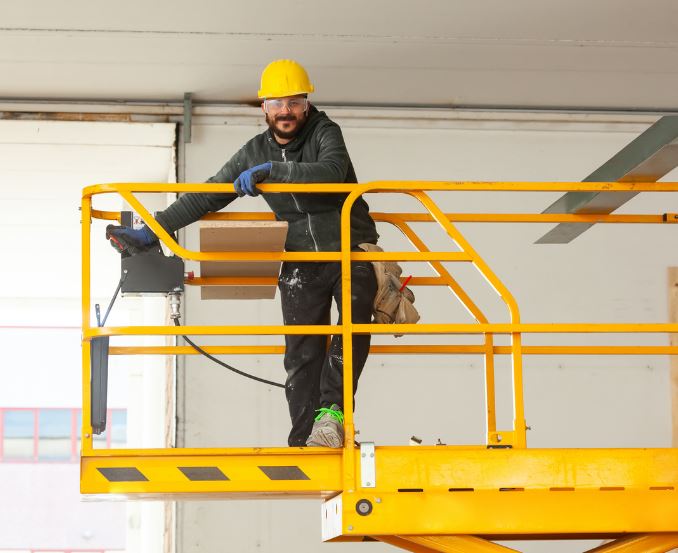
Who needs the Working at Heights Course
If you are someone whose job is to work more than 2 meters above the ground, or on an elevated surface where there is a risk of falling, or need the support of a ladder, rope or elevated surface, then you need to take RIIWHS204E Work safely at heights course to ensure safe and efficient work. This course is designed to provide you with essential skills and knowledge on how to work safely at heights or in high-risk environments where there is a risk of falling from more than 2 metres height.
Australia Working at Heights standards
In Australia, working at heights is one of the main causes of injuries and fatalities in building and construction sites. To minimise this incident, height safety equipment and working at heights practices are governed by Safe Work Australia, which sets the following Australian standards & industry codes:
- AS 1657:2018 Fixed Platforms, Walkways, Stairways and Ladders
- AS/NZS 1891.1 Part 1: Safety Belts and Harnesses
- AS/NZS 1891.2 Part 2: Horizontal Lifeline and Rail Systems
- AS/NZS 1891:3 Part 3: Fall Arrest Devices
- AS/NZS 1981.4 Part 4: Selection, Use and Maintenance of Industrial Fall Arrest Systems and Devices
- AS/NZS 4488 Industrial Rope Access Systems
- AS2625 Safe Working in a Confined Space
- AS/NZS 5532 Manufacturers’ requirements for single-point anchors
SafeWork Australia has developed Code of Practice / Industry Codes to provide practical guidance on how to meet the standards required under the Workplace Health and Safety Act and Regulations; however, the Commonwealth, States and Territories are responsible for implementing, regulating and enforcing Workplace Health and Safety laws in their jurisdiction. Therein lies a notable distinction between State or National (Government) based Codes of Practice and industry-based Codes.
In specific reference to height safety-related matters, the WAHA has developed Industry Codes which seek to draw together details of regulations, codes of practice and manufacturer recommendations to provide guidance on the correct, safe installation, inspection and recertification of fall protection systems. These are intended to enhance, not replace, the codes of practice and provide all stakeholders with industry-best-practice methods for height safety systems. These codes are an example of industry-based codes vs State or national-based Codes of Practice.
Hazards of Working at Heights in Construction
While performing work at heights, workers may face the following common hazards:
- Falls from heights
- Falling objects and tools
- Faulty Ladders
- Improper Ladder Positioning
- Overloaded Ladders
- Improper use of equipment (For example, improperly fitted harnesses can lead to accidents)
- Fragile surfaces that may not support weights
- Weather-related hazards like
- Unprotected edges and unguarded openings
- Sharp edges on structures can cause cuts or puncture wounds
- Vehicles near the worksite can cause accidents due to distraction
- Proximity of utility services
- Proximity to large water bodies
When do you Need a Working at Heights Ticket
You need a working at heights ticket when your job requires you to work more than 2 meters above the ground, or on an elevated surface where there is a risk of falling, or need the support of a ladder, rope or elevated surface, then you will require the working at heights ticket which is successful completion of RIIWHS204E Work safely at heights.
How Long is Working at Heights Course
To complete RIIWHS204E Work safely at heights at DLI Training, the course duration is 1 day.
Does the Working at Heights Ticket Expire?
No! In Australia, there is often confusion around working at heights expiry, but Working at Heights tickets do not actually ‘expire’. However, it is suggested by the Working at Heights Association (WAHA) and industry that the working at heights training be renewed every 2 years to stay updated about safety protocols. You can do DLI Training’s RIIWHS204E Work safely at heights to keep you up to date with the current changes in the industry.
What is a Confined Space
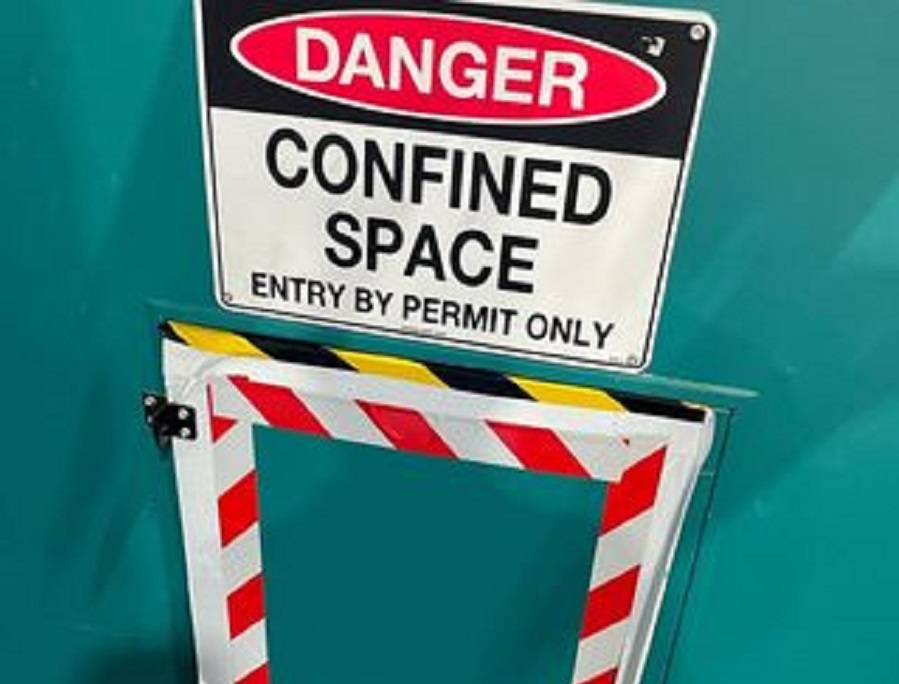
A confined space is any enclosed or partially enclosed space (vessel, pit, tank, chamber container) which poses a dangerous area due to unsafe oxygen levels.
The space is large enough for a person to enter, but it is not meant for people to stay in for a long time. Working in confined spaces can be dangerous because of problems like limited exits, poor air quality and other unsafe conditions. Special safety rules are needed to keep workers safe.
Due to factors such as restricted access, poor ventilation and the presence of hazardous conditions, working in confined spaces requires specialised safety protocols to protect workers.
Common Confined Space Examples
Here are some common examples of confined spaces found in workplaces:
- Pipes
- Access Tunnels
- Manholes
- Utility Vaults
- Pits
- Cold Storage Areas
- Vessel
- Tank
- Chamber container
Common Confined Space Hazards
The common confined space hazards a worker must be cautious about are:
- Lack of Oxygen
- Toxic Gases and Fumes
- Noise
- Physical Hazard (Sharp edges and exposed metals, moving machinery, low ceilings etc.)
- Fire and Explosion
- Engulfment
Confined Space Ticket Training
Confined Space ticket training provides workers with the knowledge and skills to safely enter, work and exit confined spaces safely which includes. Confined space training courses includes identifying confined spaces, identifying hazards, and the proper personal protective equipment needed. Every worker who works in a confined space must be fully trained on how to enter a confined space, identify and recognise hazards and evaluate and control procedures for identified potential hazards.
Getting Proper Training
- You must successfully complete any combination of the following training courses with a Registered Training Organisation (RTO) such as DLI Training that prepares you to safely work in confined spaces:
- RIIWHS202E Enter and work in confined spaces:
- Plan and prepare for working in confined spaces
- Work in a confined space
- Exit confined space
- Clean up
- MSMPER200 Work in accordance with an issued permit:
- Apply for a permit
- Identify the scope of the permit
- Prepare for permitted work
- Work in accordance with an issued permit
- MSMWHS217 Gas test atmospheres:
- Prepare for gas testing
- Test gas
- Maintain equipment
- RIIWHS202E Enter and work in confined spaces:
What are the entry requirements for confined space training?
- Minimum 18 Years of Age
- Fitness and agility to undertake confined space tasks
- Level 2 LLN
- Have a Unique Student Identification (USI) or create one
How Long is Confined Space Ticket Training
Working in confined spaces course is a 1-day training course where you will be guided by both theoretical and practical methods
How Long Does Confined Space Ticket Last
Confined space tickets do not have any expiry date. However, the Australian Standard AS2865-2009 recommends renewal every two years to get updated with their knowledge about safely working in confined spaces.
Confined Space Code of Practice
The Confined Space Code of Practice is an approved code of practice under Section 274 of the Work Health and Safety Act 2011. It provides practical guidance on managing health and safety risks when working in confined spaces and is applicable in all workplaces that carry out confined space work.
It is recommended to follow the guidelines set out in the confined space code of practice, to ensure the safety of workers who are required to enter confined spaces and reduce the likelihood of accidents or fatalities.
Where do I take working in confined spaces training in Sydney?
DLI Training is your go-to RTO-based reputable working in confined spaces training provider in Sydney
Gas Test Atmospheres Training
Gas test atmosphere training course provides the required skills and knowledge to test the working atmosphere for identifying hazardous atmospheres in a workspace using electronic test apparatus. Before entering into any hazardous environment, it is crucial to test the atmosphere of the workplace to find out if it is safe for the proposed work.
Who Needs Gas Test Atmospheres Training?
Gas test atmosphere training is essential for individuals who work in environments where atmospheric hazards could pose a threat to health and safety. These hazards might include toxic gases, flammable vapours or oxygen deficiencies.
Getting Proper Training
You must successfully complete the following training course with a Registered Training Organization (RTO) such as DLI Training that prepares you to safely work in confined spaces:
- MSMWHS217 Gas test atmospheres:
- Prepare for gas testing
- Test gas
- Maintain equipment
Gas Test Atmospheres Training Entry Requirements
To enroll in MSMWHS217 Gas test atmospheres, you need to meet the following requirements:
- You must be a minimum of 18 years of age
- Fitness and agility to undertake tasks.
- Level 2 LLN
- Have a USI or create one https://www.usi.gov.au/students/Digital-ID
Where do I take gas test atmospheres training in Sydney?
DLI Training is your go-to RTO-based reputable gas test atmospheres training provider in Sydney
What is a demolition?
Demolition work involves knocking down or dismantling a building, structure, or part of a structure that is load bearing and relates to the physical integrity of the structure. This can include but is not limited to buildings, sheds, chimney stacks, towers, storage tanks, etc.

Who is a Demolition Worker?
Demolition workers are those skilled people who are responsible for tearing down buildings, structures or specific parts of them. They play a crucial role in construction and renovation projects where old structures need to be removed to clear.
Who needs Demolition Training?
SafeWork NSW has specified that demolition workers who must be trained are those who:
- physically undertake licensed demolition work
- operate plant or equipment involved in licensed demolition work
- undertake work directly connected to the performance of licensed demolition work. i.e. a worker, whether employed directly or indirectly, who enters an area of the demolition site where licensed demolition work has commenced or is in progress.
What is Demolition Worker Training
SafeWork NSW has stated that all demolition workers must complete the following mandatory training which includes CPCCDE3016 Identify hazards on demolition sites and apply risk management strategies to do licensed work and the pre-requisite CPCCWHS2001 Apply WHS requirements, policies and procedures in the construction industry:
CPCCDE3016 Identify hazards on demolition sites and apply risk management strategies to do licensed work:
- Review site and work plans
- Apply WHS risk management strategies to work activities on demolition sites
- Apply public health and safety risk management strategies on demolition sites
- Apply environmental risk management strategies on demolition sites
- Contribute to improvement of demolition risk management strategies
CPCCWHS2001 Apply WHS requirements, policies and procedures in the construction industry:
- Identify and assess risks
- Identify hazardous materials and other hazards on work sites
- Plan and prepare for safe work practices
- Apply safe work practices
- Follow emergency procedures
Entry Requirements for Demolition Worker Course
- Minimum 18 years of age
- SafeWork NSW identification of who requires training (below)
- Level 2 LLN minimum (refer to Language Literacy Numeracy Chart)
- Have a USI or create one from: https://www.usi.gov.au/students/Digital-ID
What is Civil Plant Operation?
Plant operation is a crucial job role in the civil construction industry where people operate heavy machinery and earthmoving equipment to get the land ready for development projects.
What is an earthmoving civil plant operator?
An earthmoving plant operator is a person who operates heavy equipment such as excavators, articulated haul trucks, skid steers, front end loaders and rollers to:
- excavate earth, rocks and ore
- break up pavements and roads
- move and load earth and debris
- level and smooth out surfaces
What job can you get as an earthmoving civil plant operator?
You can get jobs such as:
Excavator operator:
- Operates an excavator which is used to dig, scoop up and move earth on construction projects, mining sites, rock quarries and other engineering projects
- Employers value operators who have received formal training as it demonstrates their commitment to professionalism and safety
Articulated Haul Truck Operator:
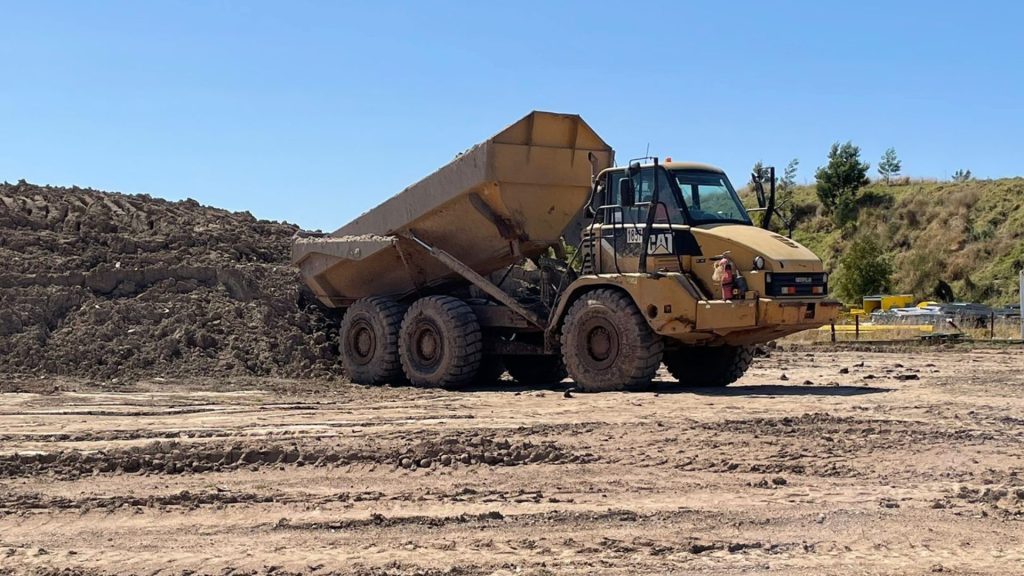
- Operates an articulated haul truck to transport large amounts of loose material like dirt, sand, gravel and demolition waste on civil and major construction sites and mining sites
- The articulated haul truck is also known as a dump truck and Moxy in industry
- Employers value operators who have received formal training as it demonstrates their commitment to professionalism and safety
Skid Steer Operator
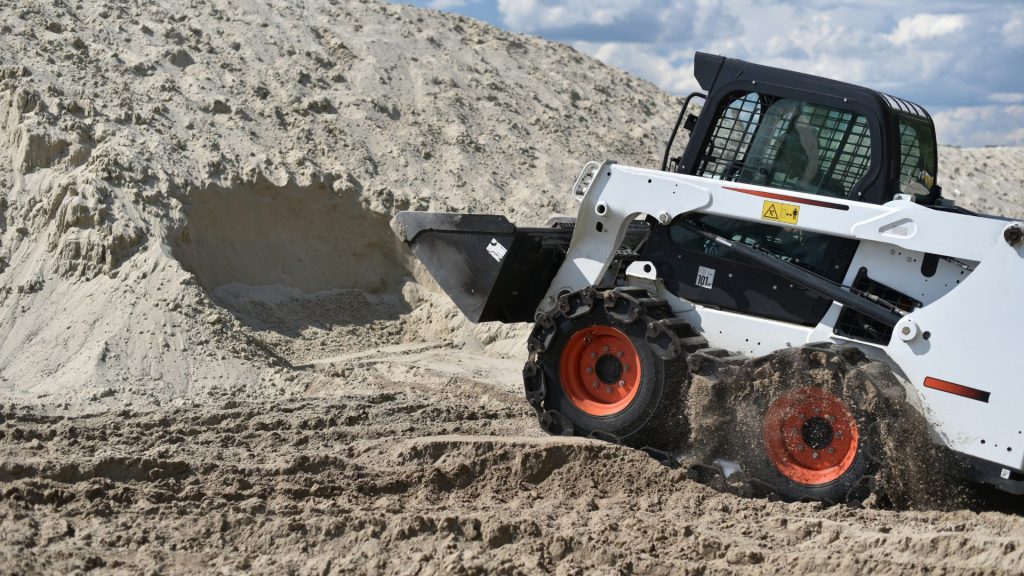
- Operates a skid steer which is a smaller, engine powered loader used to dig holes, dig trenches, move dirt, assist with laying pavement, plow snow and move large objects around construction sites
- The skid steer is also known as bobcat in industry
- Employers value operators who have received formal training as it demonstrates their commitment to professionalism and safety
Front End Loader Operator
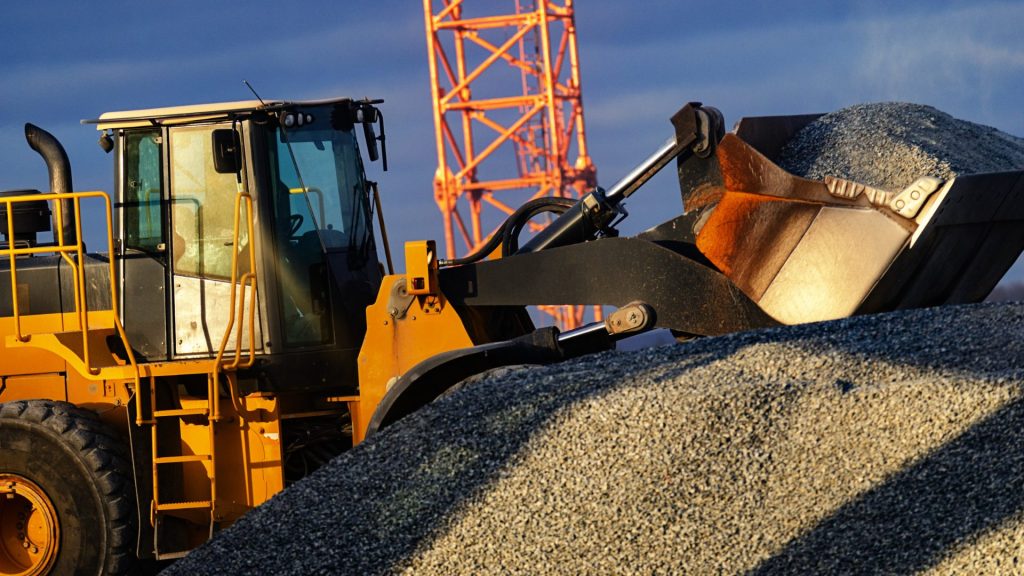
- Operates a front-end loader which has a large bucket at the front used for lifting and moving soil, sand, gravel and debris
- The front-end loader is also known as a scoop loader, bucket loader or skip loader
- Employers value operators who have received formal training as it demonstrates their commitment to professionalism and safety
Roller Operator
- Operates a roller which is designed to compact a variety of different construction materials and surfaces using different methods including but not limited to static weight, vibration, kneading or impact compaction
- Employers value operators who have received formal training as it demonstrates their commitment to professionalism and safety
Excavator Operations Course
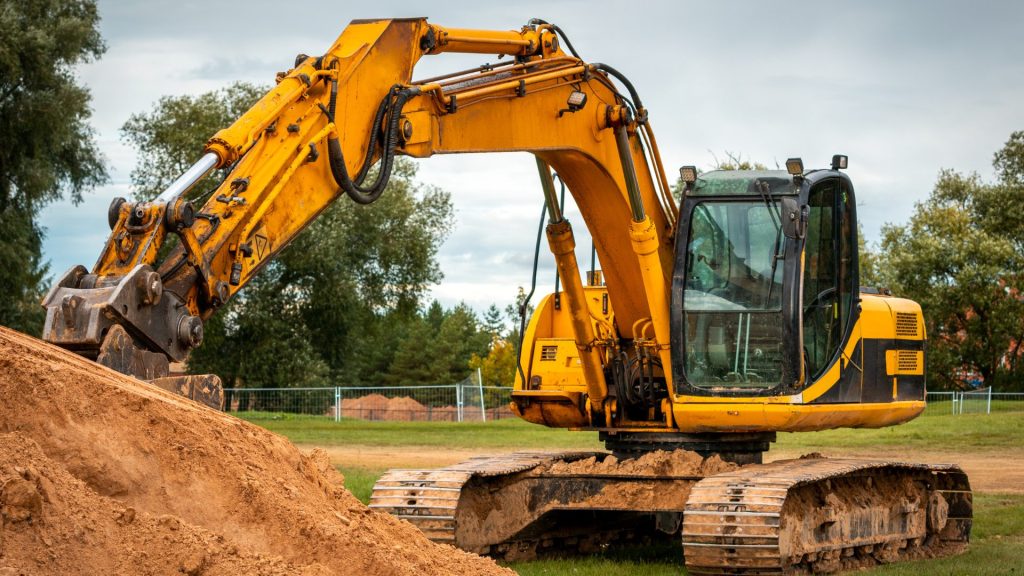
RIIMPO320F Conduct civil construction excavator operations covers the skills and knowledge required to safely operate excavator machines in construction and building sites course participants will gain the skills and knowledge to:
- Plan and prepare for excavator operations
- Operate excavator in line with established requirements
- Lift, carry and place materials to complete work activity
- Select, remove, fit and use attachments for an excavator
- Prepare to relocate the excavator
- Conduct housekeeping activities
Articulated Haul Truck Operations Course
RIIMPO337E Conduct articulated haul truck operations is designed to provide participants with skills and knowledge to operate, load, haul, and dump materials using an articulated haul truck and participants will gain the skills and knowledge to:
- Plan and prepare for articulated haul operations
- Operate articulated haul truck in line with established requirements
- Load, haul and dump materials to complete work activity
- Conduct housekeeping activities
Skid Steer Operations Course
RIIMPO318F Conduct civil construction skid steer loader provides skills and knowledge to safely and efficiently operate skid steer loader to load, haul and distribute materials. Participants will gain the skills and knowledge to:
- Plan and prepare for skid steer loader operations
- Operate skid steer loader in line with established requirements
- Load, carry and place materials to complete work activity
- Select, remove, fit and use attachments for a skid steer loader
- Prepare to relocate the skid steer loader
- Conduct housekeeping activities
Roller Operation Ticket Course
RIIMPO317F Conduct roller operations is designed to provide participants with sufficient skills and knowledge required to operate a roller machine safely and effectively in building and construction sites. Participants will gain the skills and knowledge to:
- Plan and prepare roller operations.
- Operate roller in line with established requirements to complete work activity.
- Prepare to relocate the roller.
- Conduct housekeeping activities.

Wheeled Front End Loader Operations Course
RIIMPO321F Conduct civil construction wheeled front end loader operations course provides skills and knowledge to operate a front-end loader, also known as a wheel loader or bucket loader in a variety of industries including construction and building sites. Participants will gain the skills and knowledge to:
- Plan and prepare for wheeled front end loader operations
- Operate front end loader in line with established requirements
- Attach, secure, lift, carry and place materials to complete work activity
- Prepare to relocate the front-end loader
- Conduct housekeeping activities
Telehandler Ticket Requirements in Australia
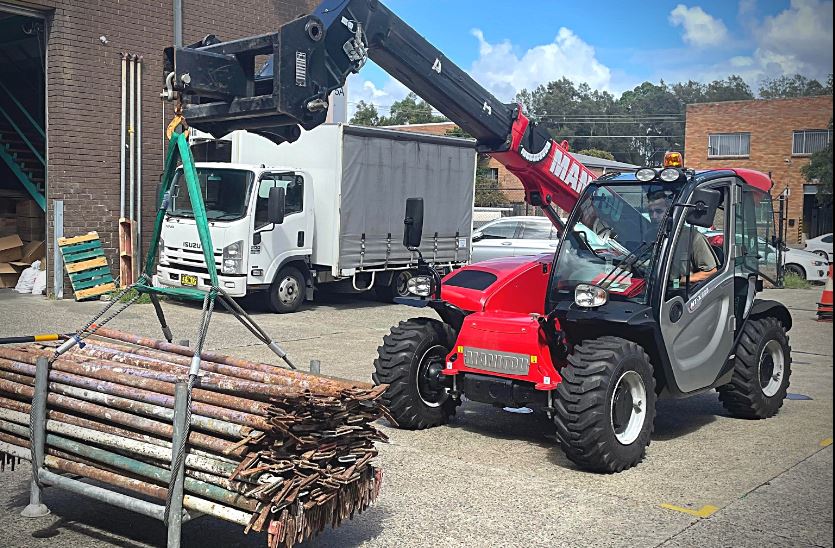
To operate a non-slewing telehandler you must first get your telehandler ticket to meet the Telehandler Ticket Requirements in Australia. So how do you do this? You must complete RIIHAN309F Conduct telescopic materials handler operation with an approved RTO such as DLI Training who is also affiliated with TSHA through our TSHA approved trainers who will arrange for TSHA to issue the Gold Card also known as the Telehandler Ticket.
What are Telehandlers?
Telehandlers, also called telescopic handlers, boom lifts, reach forklifts, or teleporters, are machines that are frequently used in agriculture and civil industry to move loads to places that a conventional forklift can’t access. Telehandlers are basically a hybrid of cranes and forklifts.
Telehandlers are a crucial machine on many job sites because of their versatility but using this machine requires a complete understanding of its functions, safety considerations and capabilities.
How can I become a Telehandler Operator?
If you want to work as a telehandler operator, you must do RIIHAN309F Conduct telescopic materials handler operation also known as Telehandler Ticket Training with a Registered Training Organisation such as DLI Training and get your TSHA Operator Gold Card which you can also get through DLI Training affiliation with TSA.
The Telehandler Ticket Training (Gold Card) in Sydney has been designed for people needing to develop the skills and knowledge required to operate Telescopic Materials Handlers. This unit applies to those working in site-based roles.
The TSHA operator Gold Card is proof of completion on one or more attachment types (modules) when operating a Telehandler. There are four different TSH attachment training modules. The attachment modules included in the non-slewing Telehandler training course:
- F Forks
- J Crane Jib (under 3 tonne rated capacity)
- B Earthmoving Bucket
TSHA
- Gold Card issued by TSHA
- Trained/Assessed by a TSHA Accredited Trainer
What is a Telehandler Ticket?
A Telehandler Ticket is a TSHA issued Gold Card which is an industry initiative helping to provide a safer working environment. It is a national program with a national database of all Gold Cards issued to telehandler operators, with the make and model including the attachment types of the Telehandler they have been trained and assessed as competent.
The TSH Gold Card is proof of completion on one or more attachment types (modules) when operating a non-slewing Telehandler.
The TSHA Gold Card training requirements were developed by the TSHA in consultation with members and industry. The intention is to assist operators, employers, equipment owners and manufacturers to comply with the OHS / WHS & regulation and promote safe use of TSH’s.
The ‘Gold Card’ provides evidence that the operators of TSH’s with specific attachment types have been trained in the safe use of, and are aware of the risks when operating them
The supplier, employers and operators all have documentary evidence of the information, training and instruction provided. This can be verified on the TSHA website via a Licence Number Lookup feature, and via a QR Code on the back of the card.
Who Needs a Telehandler Ticket?
Anyone operating a telehandler on a worksite must complete RIIHAN309F Conduct telescopic materials handler operation with certification and Gold Card (ticket) to ensure compliance with workplace health and safety regulations. Employers often mandate this certification/ticket to mitigate risks and meet legal obligations. Specific scenarios requiring a telehandler ticket include:
- Construction sites
- Warehousing and logistics facilities
- Agricultural operations
- Mining sites
What is Telehandler Ticket Training?
Telehandler training is enrolling in the course is RIIHAN309F Conduct telescopic materials handler operation, which is an approved structured course designed to equip operators with the skills and knowledge needed to operate a telehandler safely and efficiently. The training typically covers:
- Theory sessions: In this session, you will understand the function of telehandler machines, safety protocols and relevant regulations while operating a telehandler machine.
- Practical sessions: Hands-on training on telehandler operations, including lifting techniques, load management and emergency procedures.
- Assessment: Evaluating the operator’s competency through written tests and practical demonstrations.
Successful completion of RIIHAN309F Conduct telescopic materials handler operation results in the issuance of a Statement of Attainment issued by DLI Training and the Gold Card issued by TSHA as authorised through DLI Training trainers who are experienced, qualified and TSHA authorised to sign off on Gold Cards to be issued.
Telehandler Ticket Requirements
To operate a telehandler in Australia, you must meet the following requirements:
- Successfully complete RIIHAN309F Conduct telescopic materials handler operation with an RTO such as DLI Training
- Choose an RTO with TSHA Affiliation such as DLI Training
- Your DLI Trainer who is also an approved TSHA Assessor will approve the issuance your Telehandler Ticket/Gold Card
Entry Requirements for the Telehandler Ticket Course
To enroll in RIIHAN309F Conduct telescopic materials handler operation, you must meet the following basic requirements:
- Minimum 18 years of age
- Fitness and agility to undertake the course
- Level 2 LLN minimum (refer to Language Literacy Numeracy Chart)
- Have a USI or create one from https://www/usi.gov.au/your-usi/create-usi
Who are TSHA and why do you need their Telehandler Ticket to work as a telehandler operator?
The Telescopic Handler Association (TSHA) purpose is to ensure safety as well as support and promote the Telescopic Handler industry and they issue the TSHA Gold Card, also known as the Telehandler Ticket.
The TSHA is dedicated to ensuring members are kept up to date with safety information relating to the operation and regulations regarding the use of telescopic handlers. This is done through a range of services made available, including the TSHA Operator Training Program (the TSHA Gold Card), industry advice lines, and online safety resources.
EWP Ticket Courses
Become a qualified EWP operator by completing any of our EWP ticket training courses. The EWP ticket training is formal training on how to operate all-size scissor lifts, vertical lifts, trailer lifts and how to operate boom types under 11 metres and the course you need is RIIHAN301E Operate elevating work platform.
This EWP ticket allows you to operate an elevated work platform such as boom lifts, scissor lifts, cherry pickers and other heavy machinery that can be used while working at heights environments. AS DLI Training are EWPA affiliated, your ticket is recignised and highly valued by industry.
If you also want to become qualified to operate an EWP with boom length over 11 metres a separate high risk work license to operate the EWP over 11 is required and the course you need is TLILIC0005 License to operate a boom-type elevating platform (boom 11 metres or more)
At DLI Training, our EWP courses are nationally recognised and industry recognised courses as we are an approved RTO, we are affiliated with EWPA and we are a SafeWork NSW approved provider.
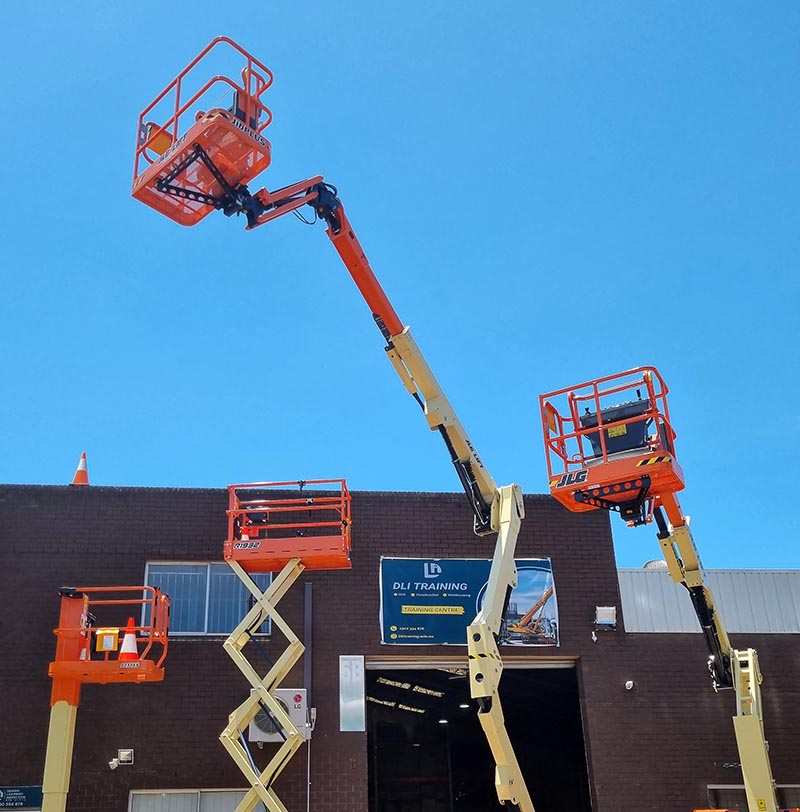
EWP Ticket Courses Overview
We have the following three courses for you:
RIIHAN301E Operate elevating work platform covers all the essential skills and knowledge required to safely operate an EWP, scissor lift and vertical lift:
- Plan and prepare for operating an elevating work platform
- Operate elevating work platform in line with established requirements to complete work activity
- Conduct housekeeping activities
TLILIC0005 License to operate a boom-type elevating platform (boom 11 metres or more) covers all the essential skills and knowledge to to safely operate a boom-type Elevating Work Platform (EWP) where the length of the boom is 11 metres or more in accordance with all relevant legislative requirements:
- plan for the work/task
- prepare for the work/task
- perform work/task
- pack up
EWP Combined Course – RIIHAN301E Operate elevating work platform and TLILIC0005 Licence to operate a boom-type Elevating Work Platform – boom length 11 meters or more:
At DLI Training, you can enroll in both EWP courses as a EWP Combined Course which includes both RIIHAN301E Operate elevating work platform (Yellow Card) and TLILIC0005 Licence to operate a boom-type Elevating Work Platform – boom length 11 meters or more (SafeWork NSW HRW License)
This EWP Combined Course offers many advantages:
- EWP Combined Course is more economical as you get a discounted price when you who enroll in both
- Save time by completing both courses at the same time as it streamlines the training process and become qualified for a wider range of EWP operations faster
- The combined EWP under 11 and EWP over 11 makes you eligible to operate a wider range of EWPs, increasing your job opportunities on a range of different project sites.
- You will be able to operate boom lifts, scissor lifts and vertical lifts and develop confidence in working at various heights.
EWPA Affiliated
- Yellow Card issued by EWPA
- Trained/Assessed by an EWPA Accredited Trainer
SafeWork NSW Approved (RTO 800483)
- Nationally Recognised select HRWL Provider
- Click to see SafeWork NSW Guidelines.
Course Entry Requirements
To enroll in an EWP Ticket course, an individual should meet the following requirements:
- Minimum 18 years of age
- Have a USI or create one from https://www/usi.gov.au/your-usi/create-usi
- Level 2 LLN minimum (refer to Language Literacy Numeracy Chart)
- 100 Points of ID Evidence of Identity – (see below)
Evidence of Identity (EOI) Requirements – TLILIC0005 License to operate a boom-type Elevating Work Platform - boom length 11 meters or more
- You must show that you are NSW resident using the SafeWork NSW 100 Points ID as listed at the following link https://www.safework.nsw.gov.au/__data/assets/pdf_file/0008/848510/evidence-of-identity-and-record-of-training-for-traffic-control-work-training-under-the-work-health-and-safety-regulation-2017.pdf
- You must bring original EOI documents that add up to at least 100 points as certified copies will not be accepted
- The EOI documents must contain your date of birth, current residential address, photo and signature
- For detailed information about acceptable documents and their point values, click here: SafeWork NSW guidelines on the 100 points of ID.
DLI Training EWP courses are nationally recognised and industry recognised
DLI Training EWP courses are both nationally recognised and industry recognised because we are the following:
- Registered Training Organisation
DLI Training is approved by the Australian Skills Quality Authority to deliver and assess Australia Qualifications Framework (AQF) courses, skills sets and single units of competency as listed on the National Register including the units of competency for EWPs
- EWPA Affiliated
The EWPA Yellow Card Training Program has been designed by Elevated Work Platform Association for people needing to develop the skills and knowledge to operate Mobile Elevating Work Platforms.The EWP tickets are licenses to operate EWPs which are issued by EWPA Yellow Card Accredited Trainers. DLI Training ensures that the course is delivered by EWPA Accredited Trainers and you will receive the authentic EWPA Yellow Card.
- SafeWork NSW
SafeWork NSW is the state WHS regulator who works alongside and in collaboration with other NSW regulators to create a safer and more confident NSW community supported by better regulation to do business safely.DLI Training, RTO Approval ID 800483 is an approved SafeWork NSW Provider with a commitment to meet the standards the government has put in place to ensure safety in the workplace. DLI Training is approved to undertake SafeWork NSW Assessments for the EWPs over 11 metres.
Course Duration
DLI Training offers the following EWP course durations:
RIIHAN301E Operate elevating work platform
1 day
EWP COURSE
EWP COURSE
TLILIC0005 License to operate a boom-type Elevating Work Platform – boom length 11 meters or more
Day 1: Presentation, discussion and operational activities.
Day 2: Theory review, unit of competence assessment (theory assessment) and practical assessment
Day 3: National Assessment Instrument conducted by a Safe Work NSW accredited assessor
COMBINED EWP:
- RIIHAN301E Operate elevating work platform
- TLILIC0005 License to operate a boom-type Elevating Work Platform – boom length 11 meters or more
Day 1: Presentation, discussion and operational activities.
Day 2: Theory review, unit of competence assessment (theory assessment) and practical assessment
Day 3: National Assessment Instrument conducted by a Safe Work NSW accredited assessor
Mode of Delivery and Location
All our EWP Courses are delivered through face-to-face classroom sessions with practical application and assessment on the machines you need at DLI Training, 5 Melissa St, Auburn NSW 2144, Sydney. Onsite training for employers is also available upon request to accommodate your needs.
Certification, EWPA (Yellow) Card and SafeWork NSW License
EWP Yellow Card: RIIHAN301E operate elevating work platform
Upon successful completion of the course, students will be issued with:
- Statement of attainment for the unit RIIHAN301E Operating Elevating Work Platform
- Same day confirmation email from EWPA with the license number
- Yellow card issued by EWPA via post to your mail address
EWP Over 11: TLILIC0005 Licence to operate a boom-type elevating work platform (boom length 11 metres or more)
Upon successful completion of the course, students will be issued with Statement of Attainment for TLILIC0005 Licence to operate a boom-type elevating work platform (boom length 11 metres or more) making them eligible to undertake the SafeWork NSW National Assessment Instrument.
SafeWork NSW License Assessment Card:
- You must successfully complete TLILIC0005 License to operate a boom-type Elevating Work Platform – boom length 11 meters or more
- Your trainer will issue you a Notice of Readiness to evidence successful completion of training
- You must schedule your SafeWork NSW assessment with Administration
- When you pass SafeWork NSW assessment will be issued with the following:
- SafeWork NSW Notice of Satisfactory Assessment (NSA) Pink copy
- SafeWork NSW Notice of Satisfactory Assessment (NSA) White copy
- Application for a National License to Perform High Risk Work (HRW License) – New Application (N5 Form)
- Then you must go to the post office to lodge the following
- Application for a National License to Perform High Risk Work (HRW License) – New Application (N5 Form)
- SafeWork NSW Notice of Satisfactory Assessment (NSA) white copy
- 100 Point ID
- SafeWork NSW lodgment payment fee (as published by SafeWork NSW)
- You must keep the SafeWork NSW Notice of Satisfactory Assessment (NSA) Pink copy which is your temporary license which is valid for 60 days
- You will receive your HRW License card from SafeWork NSW
EWP Combined Course: RIIHAN301E operate elevating work platform and TLILIC0005 Licence to operate a boom-type elevating work platform (boom length 11 metres or more)
Upon successful completion of the combined course, students will be issued with:
- Statement of Attainment for the unit RIIHAN301E Operating Elevating Work Platform
- Statement of Attainment for the unit TLILIC0005 Licence to operate a boom-type Elevating Work Platform – boom length 11 meters or more
- Same day confirmation email from EWPA with the license number
- Yellow card issued from EWPA (Posted to your mail address)
SafeWork NSW License Assessment Card:
- You must successfully complete TLILIC0005 License to operate a boom-type Elevating Work Platform – boom length 11 meters or more
- Your trainer will issue you a Notice of Readiness to evidence successful completion of training
- You must schedule your SafeWork NSW assessment with Administration
- When you pass SafeWork NSW assessment will be issued with the following:
- SafeWork NSW Notice of Satisfactory Assessment (NSA) Pink copy
- SafeWork NSW Notice of Satisfactory Assessment (NSA) White copy
- Application for a National License to Perform High Risk Work (HRW License) – New Application (N5 Form)
- Then you must go to the post office to lodge the following
- Application for a National License to Perform High Risk Work (HRW License) – New Application (N5 Form)
- SafeWork NSW Notice of Satisfactory Assessment (NSA) white copy
- 100 Point ID
- SafeWork NSW lodgment payment fee (as published by SafeWork NSW)
- You must keep the SafeWork NSW Notice of Satisfactory Assessment (NSA) Pink copy which is your temporary license which is valid for 60 days
- You will receive your HRW License card from SafeWork NSW
Why DLI Training for EWP Ticket Training
With over 20 years of experience in delivering nationally recognised training courses and our affiliation with EWPA, and SafeWork NSW Provider, DLI Training offers a supportive environment led by certified and industry expert trainers who are dedicated to providing you with the essential knowledge and skills to help you pass your assessments and obtain your EWP ticket.
- Nationally recognised training provider
- We deliver Nationally Recognised Training
- EWPA Association Affiliated
- SafeWork NSW Provider
- Weekday and weekend classes are available at the same price.
- No hidden Costs
- Our number one priority is our student’s satisfaction
- Industry partnerships
- Competency-based assessments
- Flexible learning pathways
Take the first step towards becoming a qualified EWP operator. Enrol in any of our EWP ticket training courses and gain the skills needed to operate elevated work platforms.
What is an EWP ticket?
An elevated work platform (EWP) ticket is certification that allows you to legally and safely operate an elevated work platform like boom lifts (with a boom length of less than 11m), scissor lifts, vertical lifts (VL) and other heavy machinery that can be used while working at heights environments.
What is a high-risk Boom License in Australia?
A Boom License, officially known as a high risk work license is required to operate a boom-type EWP with a boom length over 11 metres. This specialised licence is crucial for handling large and potentially more hazardous EWPs.
Who needs an EWP ticket and/or licence?
Anyone who wants to operate an elevated work platform like boom lifts, scissor lifts, cherry pickers, vertical lifts (VL) and other heavy machinery that can be used while working at heights needs an EWP ticket. Anyone who wants to operate an elevated work platform over 11 metres needs a high risk licence
Do EWP tickets expire?
EWP tickets are valid for 5 years and must be renewed upon expiration.
How long is EWP training?
At DLI Training, the following EWP courses have the following durations:
RIIHAN301E Operate elevating work platform
- EWP Yellow card – 1 day
TLILIC0005 License to operate a boom-type Elevating Work Platform – boom length 11 meters or more
- 2 days training and assessment
- 1 x day SafeWork NSW HRW assessment
EWP Combined Course
- 2 days training and assessment (includes EWP Yellow card)
- 1 x day SafeWork NSW HRW assessment
What is an EWP Yellow Card?
An EWP yellow card is issued by EWPA and qualifies you to operate EWPs with a boom length of less than 11m, a scissor lift and/or a vertical lift. DLI Training has an affiliation with EWPA as our EWP trainer/assessors are approved to issue the EWPA Yellow card
What is the SafeWork NSW assessment process for EWPs over 11 metres?
Please follow these steps strictly to ensure your certification:
- You must successfully complete TLILIC0005 License to operate a boom-type Elevating Work Platform – boom length 11 meters or more
- Your trainer will issue you a Notice of Readiness to evidence successful completion of training
- You must schedule your SafeWork NSW assessment with Administration
- When you pass SafeWork NSW assessment will be issued with the following:
- SafeWork NSW Notice of Satisfactory Assessment (NSA) Pink copy
- SafeWork NSW Notice of Satisfactory Assessment (NSA) White copy
- Application for a National License to Perform High Risk Work (HRW License) – New Application (N5 Form)
- Then you must go to the post office to lodge the following
- Application for a National License to Perform High Risk Work (HRW License) – New Application (N5 Form)
- SafeWork NSW Notice of Satisfactory Assessment (NSA) white copy
- 100 Point ID
- SafeWork NSW lodgment payment fee (as published by SafeWork NSW)
- You must keep the SafeWork NSW Notice of Satisfactory Assessment (NSA) Pink copy which is your temporary license which is valid for 60 days
- You will receive your HRW License card from SafeWork NSW
What if I fail an EWP SafeWork NSW Assessment?
If you fail the practical and/or theory components of the EWP assessment you will have the opportunity to be reassessed with a published fee that applies for the component(s) that needs to be reassessed. Trainer mentoring and support is always provided to you if you need before re-doing the SafeWork NSW Assessment.
What EWP courses are provided by DLI Training?
The list of approved EWP courses provided by DLI Training are:
EWP (Yellow Card)
- RIIHAN301E Operate elevating work platform
EWP Over 11
- TLILIC0005 License to operate a boom-type Elevating Work Platform – boom length 11 meters or more
EWP Combined Course
- RIIHAN301E Operate elevating work platform
- TLILIC0005 License to operate a boom-type Elevating Work Platform – boom length 11 meters or more
These courses are:
EWPA Affiliated
- Yellow Card issued by EWPA
- Trained/Assessed by an EWPA Accredited Trainer
SafeWork NSW Approved (RTO 800483)
- Nationally Recognised select HRWL Provider
- Click to see SafeWork NSW Guidelines.
- TLILIC0005 License to operate a boom-type Elevating Work Platform – boom length 11 meters or more only
What are the entry requirements for EWP training?
To take EWP ticket training in Sydney, you must meet the following requirements:
- Minimum 18 years of age
- Have a USI or create one from https://www/usi.gov.au/your-usi/create-usi
- Level 2 LLN minimum (refer to Language Literacy Numeracy Chart)
- 100 Points of ID Evidence of Identity – TLILIC0005 License to operate a boom-type Elevating Work Platform – boom length 11 meters or more (only)
Does DLI Training also provide workplace training?
Yes, DLI Training also provides workplace training upon the employer’s request.
How do I book my EWP course?
To book your chosen EWP course, you can contact us at 1300 354 876, or you can directly book from our website.
What is a forklift license?
A forklift license is an official document that certifies a person has been fully trained, undertaken a SafeWork NSW license assessment and has the ability to operate a forklift truck safely in the workplace.

Who needs a forklift license?
If you are planning to operate a forklift truck in Australia as part of your job, you need to complete a forklift training course and SafeWork NSW High Risk Work Assessment to get your forklift license. Driving forklifts in Australia is classified as high-risk work and the operator must be licensed to work.
What do you need to get a forklift license in Australia?
To get a forklift license, you must first successfully complete the course TLILIC0003 License to operate a forklift truck with an approved Registered Training Organisation such as DLI Training. Once you have successfully completed TLILIC0003 License to operate a forklift truck, you are eligible to be assessed for the Forklift License with a SafeWork NSW Approved Provider such as DLI Training.
What are the requirements to get a forklift license?
Here’s what you need:
- You must be at least 18 years old.
- Have a Unique Student Identifier (USI).
- Meet a Level 2 standard in Language, Literacy, and Numeracy (LLN)
- Provide evidence of Identity as per SafeWork NSW 100 Point ID checklist
- Successfully complete TLILIC003 License to operate a forklift truck
- Pass the SafeWork NSW HRW License assessment
- Submit the correct documents to WorkSafe.
- Apply for your license within 60 days of finishing your training and assessment
How long does it take to get a forklift licence?
It usually takes 2 days to complete TLILIC0003 License to operate a forklift truck plus one additional day for the SafeWork NSW HRW Assessment
How do I get my forklift license after training?
After successfully completing TLILIC003 License to operate a forklift truck:
- Schedule to do the SafeWork NSW HRW Assessment
- The Assessor will provide you with documents when you pass the HRW Assessment
- Submit these documents and pay the necessary SafeWork NSW published fees
Do forklift licenses expire?
Yes, your forklift license can expire. A forklift license in Australia is valid for five years so you will need to renew it to keep operating forklifts legally.
What is the difference between LF and LO forklift licences?
LF License: This license lets you operate forklifts with load-shifting mechanisms (most forklifts fall under this category).
LO License: This license is specifically for order-picking forklifts used for retrieving goods from storage racks.
Who provides forklift license training in Sydney?
DLI Training is a Registered Training Organisation (RTO ID: 21714) and SafeWork NSW Approved Provider (RTO 800483), approved to offer nationally recognised forklift training courses and SafeWork NSW Assessment in all areas of New South Wales, Australia.
Do you also provide workplace training?
Yes, if your employer requests it, we can provide workplace training as per the workers’ needs.
What should I wear for forklift training?
In your forklift training class make sure to wear the following:
- Comfortable, fitted high vis clothes at all times
- Steel-capped safety boots (a must!).
- PPE including:Hard hat, Safety glasses, Steel capped boots
How do I book my forklift course at DLI Training?
To book our forklift course, you can call us at 1300 354 876 or head to our website and book online.
Traffic Control Courses
to direct traffic, ensuring safe environments for workers and road users. At DLI Training, we offer the following traffic control courses:
RIISS00054 Traffic Controller Skill Set
- Traffic Controller Course (Blue Card)
RIISS00055 Traffic Management Implementer Skill Set
- Implement Traffic Control Plan (Yellow Card)
RIISS00054 Traffic Controller Skill Set, and RIISS00055 Traffic Management Implementer Skill Set
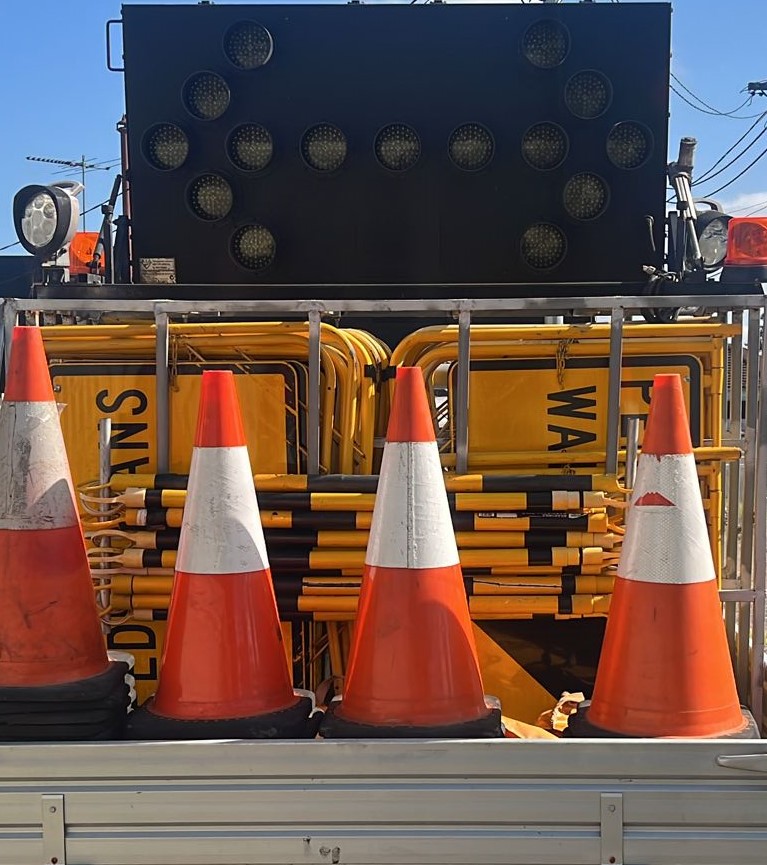
Who is the Traffic Controller?
Traffic controllers are those who are responsible for managing the flow of vehicles and pedestrians around construction zones, roadworks and other sites where traffic disruptions occur. They are responsible for minimising risks and hazards in high-traffic areas by ensuring the safety of all road users and workers.
Duties and Responsibilities of Traffic Controller and Traffic Implementer
The expected duties and responsibilities of traffic controller in Australia Include:
- Stop and direct traffic with a stop/slow bat.
- Monitor traffic using portable traffic control devices and temporary traffic signs in accordance with traffic management plans and traffic guiding schemes.
- Maintain traffic incident reports.
- Understand the traffic guidance schemes (TGSs), also known as traffic management plans (TMPs), for the site.
- Assess and adapt to changes in the environment, such as traffic volume, weather, road conditions, Work Health and Safety (WHS), and operational needs.
- Conduct risk assessments for personal safety.
- Participate in toolbox lectures (specially on traffic management).
- Utilise communication methods and equipment.
- Comply with traffic control policies and procedures.
The expected duties and responsibilities of traffic implementers in Australia Include the following:
- Determine the safety implications of traffic control at roadworks and personal duties.
- Set up, monitor, and shut down traffic control devices in accordance with a nominated TGS/TMP’s WHS and regulatory requirements.
- Operate a two-way radio properly and efficiently.
- Check, clean, and store equipment after completing work and closing a TGS/TMP.
- Understand the basic operation of the TGS/TMP system.
- Locate and implement required legislation, documentation, rules, and procedures, including documentation for workplace projects and traffic management.
- Locate and apply the necessary legislation, regulations, codes, and procedures, including Austroads Codes of Practice and Workplace Health and Safety, for temporary traffic management.
- Conform to all workplace health and safety (WHS) and operational regulations.
- Use the site/location evaluation to identify topographical landmarks and implement permitted risk control.
- Conduct an onsite inspection of a TGS/TMP to detect any unanticipated risks or hazards.
- Prepare for any emergencies that may come.
- Ensure that the spacing between signs and traffic control devices is consistent with the TGS/TMP.
- Understand the speed, environment, vehicle type and class, traffic density, sight lines, weather patterns, and surface type.
- Maintain traffic incident reports.
- Keep track of traffic controllers.
How to Become a Traffic Controller in Australia
Here are the steps to follow to become a licensed traffic controller and/or traffic implementer in Australia:
Step 1: Satisfy Eligibility Requirements
The basic eligibility requirements are:
- You are at least 17 years old
- You have 100 points of an ID Evidence of Identity card
- You have a valid USI
- You have proficient English
Step 2: Complete the Training and SafeWork NSW Live Assessment
You must enroll in RIISS00054 Traffic Controller Skill Set and RIISS00055 Traffic Management Implementer Skill Set with DLI Training which are approved by the relevant state or territory and SafeWork NSW Approved Provider. These courses cover the requirements and skills needed for traffic control and traffic implementer and the SafeWork NSW issues the blue and yellow cards after successful completion
Step 3: Getting Certified by the RTO and SafeWork NSW
After successful completion of RIISS00054 Traffic Controller Skill Set and/or RIISS00055 Traffic Management Implementer Skill Set, you will be given the RTO certification including Statement of Completion and Statement of Attainment, which is proof that you are eligible to start working as a traffic controller and/or traffic implementer until SafeWork NSW issues the blue and yellow cards.
Step 4: Apply for Job Opportunities
How Much Do Traffic Controllers Make
In NSW, the salary of traffic controllers can vary depending on factors such as location, experience, and the type of projects they work on. According to the Jora Salary Calculator, the published hourly rate for a Traffic Controller is approximately $36.87 per hour.
Requirements to Become a Traffic Controller
The basic requirements to become a traffic controller in Australia include:
- You must be at least 17 years old
- Complete traffic control training courses
- Physical stamina
- Be able to speak and read English
- Focused attention
- Problem-solving skills
- Have a current Safe Work NSW White Card (or equivalent).
- You have 100 points of ID Evidence of Identity card
- You have a valid USI
How Long is the Traffic Controller Course
The duration of a Traffic Controller course in Australia varies depending on the training provider and the specific skills included in the Training. At DLI Training, the course duration is structured based on the required skill sets:
- Traffic Control Course (Blue Card): 1 Day Training + On the Assessment Day (2-4 hours)
- Implement Traffic Control Plan (Yellow Card): 1 Day Training + 1 Day Live Practical Assessment
- Traffic Control Combined Course: 2 days training + 1 day live practical assessment
Jobs Opportunities for Traffic Controller in Australia
In NSW, traffic controller jobs are in high demand, particularly in the construction, roadworks, and infrastructure sectors. To explore job opportunities in this field, you can visit the following websites:
- Seek
- Indeed
- Jora
- Glassdoor
Demolition Worker and Demolition Supervisor Training
Demolition training covers essential skills and knowledge required to identify common hazards and apply risk management strategies for safe work at demolition sites. Here we can tell you about training for demolition workers and also demolition supervisors
Demolition Worker Course
SafeWork NSW has announced that all demolition workers must complete mandatory demolition worker course requirements for CPCCDE3016 Identify hazards on demolition sites and apply risk management strategies to do licensed demolition work and CPCCWHS2001 Apply WHS requirements, policies and procedures in the construction industry. This is to ensure that all demolition workers know how to do their job safely.
Who needs training?
SafeWork NSW identified workers who must be trained are those who:
- Physically undertake licensed demolition work
- Operate plant or equipment involved in licensed demolition work
- Undertake work directly connected to the performance of licensed demolition work
What will I learn in the Demolition Worker Course?
CPCCWHS2001 Apply WHS requirements, policies and procedures in the construction industry:
- Identify and assess risks
- Identify hazardous materials and other hazards on work sites
- Plan and prepare for safe work practices
- Apply safe work practices
- Follow emergency procedures
CPCCDE3016 Identify hazards on demolition sites and apply risk management strategies:
- Review site and work plans
- Apply WHS risk management strategies to work activities on demolition sites
- Apply public health and safety risk management strategies on demolition sites
- Apply environmental risk management strategies on demolition sites
- Contribute to improvement of demolition risk management strategies
Demolition Supervisor Course
To satisfy SafeWork NSW changes to state demolition legislation, construction workers are now required to hold nationally accredited demolition supervisor course to be eligible to work as a nominated supervisor for a NSW Demolition license Holder or to apply for your demolition licence. These units are drawn from CPC30420 Certificate III in Demolition and CPC41020 Certificate IV in Demolition qualifications and are packaged to meet the SafeWork NSW requirements
Pre-requisites and Participant requirements
SafeWork NSW identified that the pre-requisites you need to do the Demolition Supervisor course are:
CPCCWHS2001 Apply WHS requirements, polices and procedures in the construction industry:
- This unit of competency has been included in the Demolition Supervisor Course Structure and Content (see below)
- Students who have completed this pre-requisite unit must provide certification to be granted credit transfer
VOC or Statement of Attainment for at least 2 of the following mobile plants:
- Dozer
- Front-end Loader
- Excavator
- Skid Steer Loader
- Tailgate Loader
DLI Training can provide the training for the mobile plants as a separate course.
What will I learn in the Demolition Supervisor Course?
SafeWork NSW has approved 11 units of competency plus the mandatory pre-requisite unit of competency from CPC30420 Certificate III in Demolition and CPC41020 Certificate IV in Demolition which meet the training requirements for individual applicants and supervisors nominated in a new application
Other Short Courses
Asbestos Training Courses
Asbestos training courses are designed to provide essential skills and knowledge to identify asbestos-containing materials and apply risk management strategies. Following are the asbestos training courses offered by DLI Training:
- Asbestos Awareness Training Course
- Remove Friable Asbestos Course (CLASS A)
- Non-friable Asbestos Course (CLASS B)
- Supervise Asbestos Removal Course
Why Choose DLI Training
DLI Training, RTO Approval ID 800483, has been offering building and construction courses for a decade. Here are the reasons why you should choose DLI for your building and construction courses in Sydney:
- We provide high-quality Training
- We deliver Nationally Recognised Training
- Our number one priority is our student’s satisfaction
- Weekend and Evening classes are available
- Flexible study now pay later options
- Industry partnerships
- Competency-based assessments
- We offer flexible learning pathways
Conclusion
DLI Training’s building and construction courses provide individuals with the essential skills and knowledge required to kickstart or excel in their careers in the building and construction industry. These courses are designed to meet Australian standards, ensuring that participants are equipped to handle real-world challenges safely and efficiently.
Whether you aim to start or enhance your career in the building and construction industries or ensure workplace safety and compliance, DLI Training’s building and construction courses are a worthwhile investment in your professional development.
Related Blog Post
- Roller Operation Ticket Cost in Australia
- What is a Forklift Licence? Everything You Need to Know About Forklift Licence at NSW
- How Long is a Forklift Course: How Much is the Forklift Course Cost in Syndey, NSW?
- Asbestos Removal Training: All you need to know
- How to Become a Traffic Controller in Australia


